There are 2 popular types of personal-branding.
There is influencer-branding.
And there is business-branding.
Building an influencer-brand mostly revolves around you.
And building a business-brand mostly revolves around your service.
However for people like us that want to:
grow our audience make money doing what we love build a successful brand (& business) In a way that is sustainable, enjoyable, and authentic to us…
Out of the two, which is the best approach to building our brands in a way that can be monetizable?
And is there an alternative, unique approach to this as well?
That is what we will explore here :)
We’ll be going over the differences between influencer-branding & business-branding, through exploring each of their:
definitions examples pros & cons Now on the surface level this may not seem valuable or applicable to you.
However exploring the two will help you clarify how to build your own brand, how to create your content, and how to monetize yourself—in a way that aligns with you the most.
And in general, you will know where to take your brand and business towards.
Soooo with that said.
If this resonates, let’s hop into this hole together 🕳️
The Influencer-brand: branding that revolves around you Influencer brands, or also known as life-style brands, or celebrity-brands are mostly built around who you are.
This is the typical of approach that most creators start out with when building a social-media brand, and in general, most creators out there.
Influencer-branding is less about the niche, the audience, or your customers.
It is more about you, your life, and your message first - and everything else is either secondary or just as byproduct.
The term “you are the niche” that you hear everywhere applies to this even more here as well.
Some examples of some outlier influencer-brands that have killed it in the influencer-game:
01 Emma Chamberlain: 15.1 mil followers on IG, founder of hosts a big podcast, models for big brands like Louis & Calvin, and does whatever she wants on her social-media brand02 Zachpogrob: 1.4 mil followers on IG, built a movement on his idea of obsession, spreading the message through content & ideas related to it03 Casey Neistat: 12+ mil on YouTube, filmed creative & travel videos along with independent films, and founded 2 businesses(Not saying they are categorized strictly as “influencer-brands,” but that’s mostly the feeling you get out of their branding & social-media presence).
Now what are the features behind building an influencer brand opposed to be a business-brand?:
The pros of influencer-branding is that you have:
More freedom to share your thoughts, interests, or life in your content because you are mostly not niche or topic-focused More room to be transparent, authentic, and vulnerable, more opportunities to create deeper relationships with your audience More opportunities to build and spread a positive message or your creative-vision More long-term sustainability with content diversity you can create along with other products that you can build for your audience Overall you have more flexibility - and you have the power to do almost anything you want with it.
However just like anything, the influencer-branding method comes with many cons as well, especially for beginners who are starting out.
And what are they?
You may risk having:
Less perceived expertise or “authority” in your niche because you don’t share your knowledge or solve specific problems for your audience enough, through your content Less brand-positioning and it may be confusing for your audience to know “what you do” or offer Less chances of attracting any of your ideal-customers to your core-services Less overall direction with your brand and as a creator With the freedom that you have for your content-marketing with the influencer-approach, you overall have less chances of building a brand that can show that you are trust-worthy in your market.
While having less chances of attracting aligned-customers to your core offerings.
The people here that I listed are outliers because they have a portfolio of businesses and projects, helping them make a ton of impact and money along their brand.
And you probably don’t have any just yet.
However, if building a brand with this approach works for you the most, despite the flaws, then I empower you to do so!
Though on the next section, we will explore how business-branding works.
And how you can start implementing this approach to your brand as well.
Wonderful.
Let’s lean into this.
The Business-brand: branding that revolves around your service Business-brands, also known as founder-brands, or corporate brands, are mostly built around a service.
The core-service that you are serving to a specific niche and selling to your audience - based around your skillset.
Business-branding is less about you.
And more about your niche, your audience, and your customers that you are positioning your brand towards.
Here you are driven less about followers or engagement, but more about acquiring more dream-customers and recurring-income.
And in general, you who is reading this probably is taking a similar approach to this as well.
Some examples of bigger business-brands out there are:
01 Matt Gray: has 1.3 million on IG, founder of Herb & Founder OS, creates content & offers products mostly on one-person businesses02 Justin Welsh: 500k+ on X & LinkedIn, featured in Forbes List, creates content & offers products mostly on solopreneurship03 (Danny 🤣) Dan Koe: 1.6 mil+ on IG, author of The Art of Focus, founder of Kortex, and creates content mostly on one-person businesses & building a better life(Not saying I’m categorizing them strictly as a “business-brand,” but that’s most of the vibe that you get out of their branding and their marketing).
Now what are also the features behind building a business-brand opposed to an influencer-brand?:
The pros of business-branding is that you have:
More opportunities to share your knowledge or expertise to your audience, building their trust that you can solve their biggest problems. More niche-focused content-strategy and brand-positioning that increases your chances of attracting your ideal-audience & customers to your services More sustainable when it comes to attracting customers and easier to scale your income Overall, there is more impact that you can create for your market and more money to be made with this approach.
However just like the last brand-building method, there are cons for this as well.
And you can even look at these cons as the opposite of what influencer-branding comes with.
With that, you may risk having:
Less freedom to share your thoughts, interests, or life in your content because you are more focused on a niche or topic Less moments to be truly transparent, authentic, and vulnerable with your audience Less long-term sustainability, flexibility, or enjoyment with mainly creating niche-specific content or offerings Despite the biggest pros here of cultivating thought-leadership in your niche and making more money in the short-term…
If you are the type of person that wants to build their brand in a more flexible and freeing way, then this may not be sustainable in the long-run.
Especially if you feel you are a multi-dimensional person with many interests to share or have many pursuits that you’d like to follow.
But if this approach resonates with you the most, then continue to do so.
In the next section, we’ll have the opportunity to create our own unique-approach to building our brand.
So we can combine all of the pros of both influencer & business-branding - and start building a brand that feels more enjoyable and fun for us.
Especially, towards building a brand that reflects more of YOU.
I call this, holistic-branding.
The Holistic-brand: building your brand, in your own way I really love non one-size-fits-all approaches.
And for this specifically is an approach to branding that combines both the methods and benefits of influencer-branding & business-branding.
Going towards building a brand that is centered around both YOU and your service.
So can find the most flexibility, sustainability, and alignment for building your brand.
And can make the most impact and income, doing it in your own way.
Here is a visual of the holistic-branding model:
On the left is influencer-branding vs on the right is business-branding - and in the middle is your own unique intersection.
Feel free to play around with this and see where you lie within the intersection here.
For an idea, here are some other examples here:
I personally revolve my brand around the middle here.
Because personally:
My content strategy is more focused around my niche & service - however I love to share my other passions, thoughts, and life a lot, compared to many others in my space My brand is positioned around a specific niche and around a core-service that I serve to my audience & customers - however I still blend in my interests of creativity and spirituality with it. And I am spreading my own message (“YOUNIQUENESS”) that is intended to be broad. Some variables can shift but overall this is my own ideal place that feels right to be at.
Blending in the elements I love about influencer-branding, along with business-branding - that is my example.
Now how about you?
Using these other sample visuals, where do you see yourself lying within these circles?
What would you want your brand to look like when it comes to:
making your own content-strategy? positioning your own brand? growing your own audience? That is something that I empower you to explore for yourself.
So you can create your own unique path towards building a brand—and ultimately a business that works for you.
That is aligned with you and your values, that can sustain you for the long-term, and can get you the results that you aspire towards.
The Way of Holistic-branding I would just like to preface that the mechanics behind influencer and business branding that I’ve mentioned isn’t absolute - this is just a common, relative perspective that I’ve taken the time to observe in my creator journey.
And my philosophy behind holistic-branding, call it whatever you want lol.
All of this is about not forcing ourselves into boxes that don’t serve us or follow one-size-fits-all models.
Even if we are oriented towards making an imprint and an impact on the world, whether big or small, we should always listen to what we want to do first.
The personal can only happen before the transpersonal.
So with that said, take these ideas with you and build something beautiful 🥂
All the love & energy.
Anthony Ng.
—
If you feel curious, here are 2 ways you can receive deeper guidance from me. 01 Experience my creator-guidance program: if you want to create your own unique path towards building and monetizing your authentic creator-business, through being your true self, I invite you to join The Way of YOUNIQUENESS.
Let's co-create!
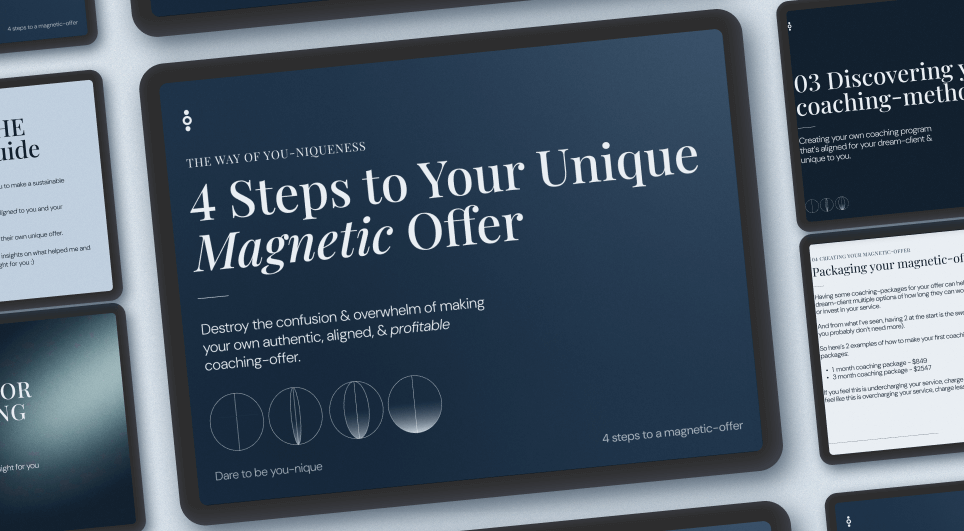
02 Receive my "4 Steps To Your Magnetic-offer" guide: Feel confused, lost, or overwhelmed on how to start building an offer for your coaching-passion? You can receive a free guide on crafting an aligned, profitable magnetic-offer here :)
I want to craft my magnetic-offer!
.png)


-min%20(1)%20(1).png)
.png)